

Bio: Nitheesh is the founder of MentorCrux, an India-based mentorship platform for core engineers. His mission is to create a space where expert knowledge is accessible to all, providing the tools and insights necessary for professional growth in the core engineering sector.
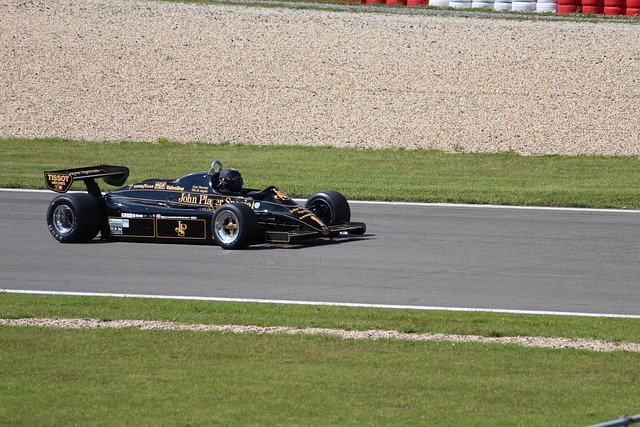
If you’ve ever watched a Formula 1 race, you know it’s not just about speed — it’s about control. Every curve, every straight, and every split-second move depends on one invisible force: air. The science behind how that air moves is called fluid dynamics, and F1 cars are a perfect example of it in action.
The Art of Moving Through Air
At top speeds of over 300 km/h, an F1 car battles with air constantly. Engineers use the same fluid dynamics principles that you learn in your first year of engineering — pressure, velocity, and flow patterns — but applied to the extreme.
The goal is simple: create downforce (to push the car onto the track) while reducing drag (which slows it down). Modern cars generate so much downforce that they could technically drive upside-down at full speed — a wild, but true, example of physics at work.
Small Changes, Big Impact
Even a minor curve on a wing or a vent angle can change how air behaves. F1 teams test hundreds of designs in Computational Fluid Dynamics (CFD) software before approving one. This is the same method used in industries like civil, mechanical, and aeronautical engineering — from designing aircraft wings to cooling systems and even tall buildings.
For example, the Burj Khalifa was shaped to reduce wind pressure and prevent vibrations — much like how an F1 car’s body is shaped to stay stable at high speeds.
Lessons from the Track for Engineers
Formula 1 cars show that theory alone isn’t enough — you need testing and iteration. Engineers constantly measure air pressure, flow, and temperature in real time. When something doesn’t perform as expected, they tweak it and test again.
That’s exactly how real-world engineering works. Whether you’re designing a bridge, an air-conditioning duct, or a mechanical pump, understanding fluid dynamics helps you make things safer, faster, and more efficient.
A good example is the Drag Reduction System (DRS) in F1, which adjusts airflow to reduce resistance on straights. The same concept is used in industrial fans, turbine blades, and even fuel systems to optimize performance.
The Takeaway
Formula 1 isn’t just a sport; it’s a moving laboratory that teaches us how air behaves and how small changes can lead to massive improvements. It shows how fluid dynamics combines creativity with precision, turning invisible air into measurable performance.
If you’re an engineering student who wants to explore how real-world projects apply these concepts, mentorship can help you connect the dots between textbooks and technology.
👉 Learn from experienced mentors at MentorCrux — where civil, mechanical, and aeronautical engineers share the practical side of engineering that classrooms often miss.
Leave a Reply