
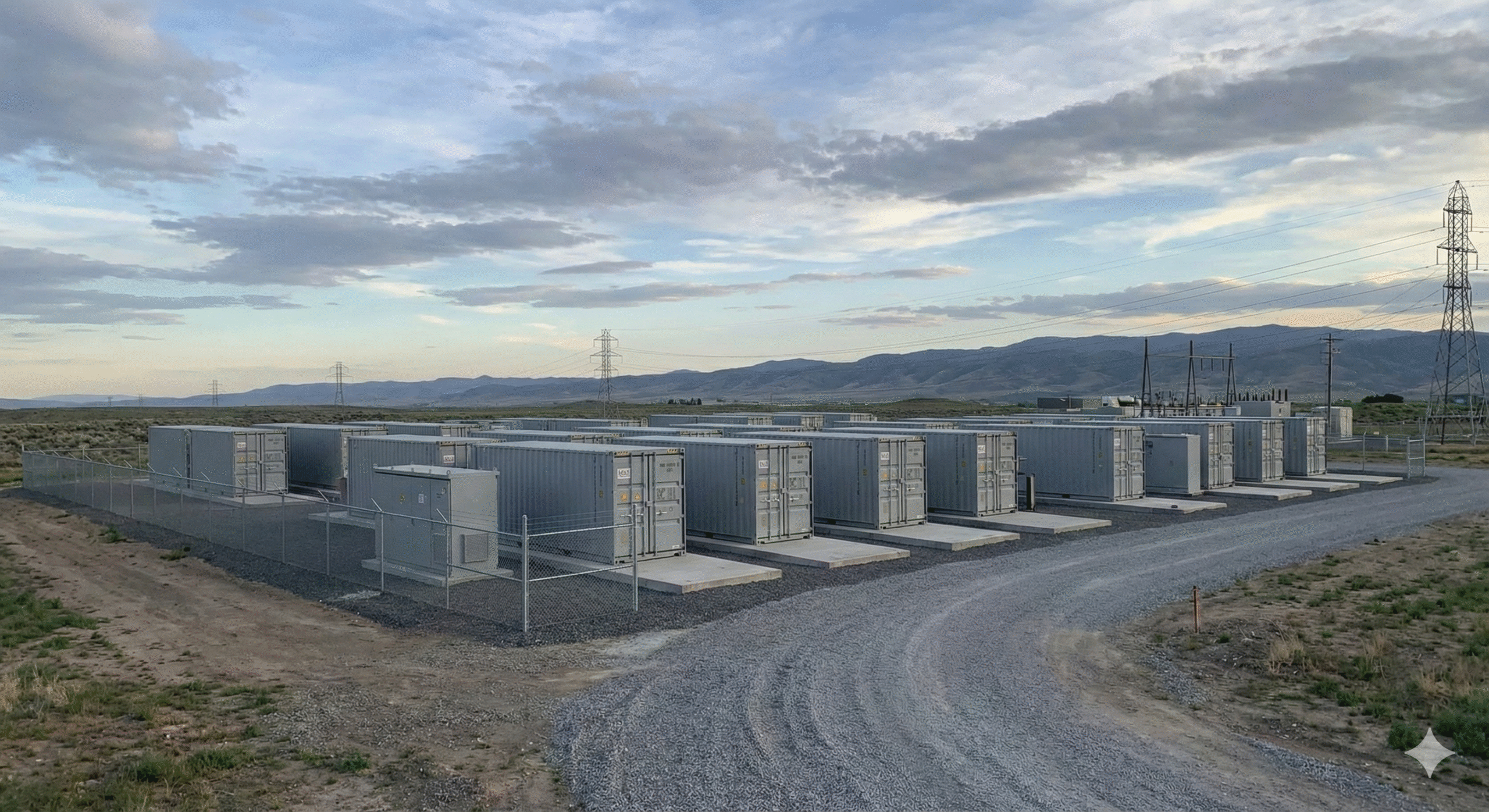
Note: This image is an AI-generated rendering, not a photograph of a specific facility.

Bio: Nitheesh is the founder of MentorCrux, an India-based mentorship platform for core engineers. His mission is to create a space where expert knowledge is accessible to all, providing the tools and insights necessary for professional growth in the core engineering sector.
Battery Energy Storage Systems, known as BESS, are becoming one of the most important technologies in the world of energy. If you are studying Electrical, EEE, ECE, Mechanical, Civil, Chemical, Aerospace or even Computer Engineering, this is a field you should understand early.
BESS is no longer a niche topic. It sits at the centre of renewable energy, EV charging, smart grids and modern power systems. Companies in India and around the world are hiring engineers who understand how batteries interact with the grid, how inverters work, how energy flows, and how to operate these systems safely.
This blog gives you a simple and practical guide on why BESS is rising fast and why engineering students should pay attention.
What exactly is BESS?
A Battery Energy Storage System stores electricity in rechargeable battery banks and releases it whenever needed. A typical BESS has:
• Battery racks
• Inverters and power conversion systems
• Control, monitoring and protection systems
• Cooling, HVAC and fire protection systems
• Cloud or on-site software for energy management
BESS can be small, like home batteries, or huge, like megawatt-scale grid storage units connected to solar plants, wind farms or substations.
The goal is simple. Store energy when it is cheap or available. Use it when demand is high or renewable energy drops.
Why BESS is growing so fast
There are three major reasons:
1. Renewable energy needs backup
Solar plants generate during the day. Wind power depends on weather. Without storage, both become unstable. BESS makes renewable energy dependable by:
• Storing excess solar and releasing it at night
• Stabilising sudden changes in generation
• Supporting the grid during low renewable output
This makes solar and wind far more useful for India’s growing energy needs.
2. EV charging needs support
Fast chargers draw high power, especially at peak times. A BESS installed at an EV charging station reduces stress on the grid and allows faster charging without upgrading transformers.
3. Power grids are becoming smarter
Modern grids need flexibility. BESS provides:
• Frequency regulation
• Voltage support
• Peak shaving
• Black-start capability
• Backup during faults
This is why utilities, renewable developers, metro systems, industries and data centers are investing heavily in energy storage.
India’s power sector plans for large-scale storage by 2030, which means more jobs and more projects in this field.
Where BESS is used (real examples)
• Solar + BESS plants to supply evening peak power
• Wind farms to smooth output and support grid stability
• Highway EV charging stations for fast charging
• Commercial buildings and factories to reduce electricity bills
• Microgrids and rural electrification to provide reliable power
• Data centers for backup and peak management
So BESS is not limited to one industry. It operates across energy, mobility, construction, manufacturing and even aerospace.
Why core engineering students should care
Electrical, EEE, ECE
You will work on grid integration, inverters, protection, EMS, SCADA and control systems. BESS sits directly inside power systems and power electronics—two strong skill areas for electrical engineers.
Mechanical and Civil
Large BESS projects need enclosures, HVAC systems, structural foundations and safety engineering. Mechanical engineers handle thermal management and cooling. Civil engineers design foundations, buildings, trenches and layouts.
Chemical Engineering
Battery chemistry, degradation, safety, recycling and cell manufacturing are chemical-engineering intensive areas. India is building its battery manufacturing sector, which needs skilled chemical engineers.
Aerospace and other branches
Aerospace engineers already work with high-reliability battery systems in aircraft, drones and satellites. Knowledge of BESS concepts helps in high-density energy storage applications.
Skills students should start building now
You do not need to become a battery expert on day one. Start with the basics:
• Power system fundamentals
• Battery basics: lithium-ion, safety, thermal behaviour
• MATLAB / Simulink modelling
• Introduction to PSCAD or similar tools
• Basics of inverters, converters and control theory
• Understanding of grid codes and protection
• Python for data analysis
• Awareness of renewable energy systems
These skills open doors to internships and strong final-year projects.
How to get started
Here are simple steps for beginners:
- Learn battery basics: cell, module, pack, BMS, SOC and SOH.
- Study how solar + BESS systems work.
- Model a simple battery system in MATLAB or Simulink.
- Follow major BESS projects and tenders in India.
- Take guidance from engineers working in power systems or renewable energy.
- Build a small academic project involving storage or hybrid systems.
Starting early is the real advantage.
Final thoughts
Battery Energy Storage Systems are becoming the backbone of the modern energy world. For engineering students in India, this is one of the most promising career areas for the next decade. Whether you study Electrical, Mechanical, Civil, Chemical, EEE, ECE or Aerospace, BESS connects directly to your field.
If you want career clarity, skill guidance and real project direction in BESS, renewable energy and power systems, you can explore mentors and join the engineering community at MentorCrux.
The energy future is arriving fast. Your job is to be ready for it.
Leave a Reply